
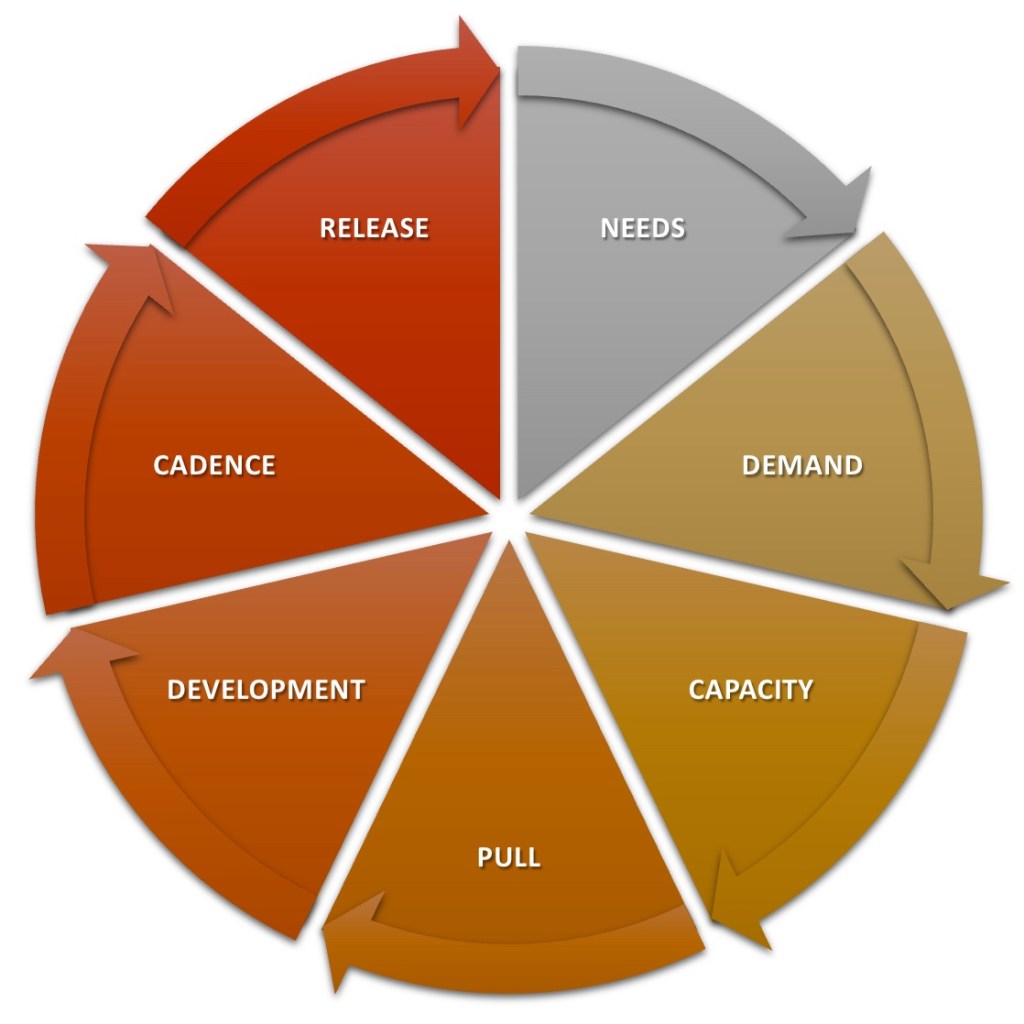
It all starts with a need that must be satisfied, a problem that needs solving. So there’s a demand for value that is to be released for consumption.
This is the simplistic way, however in between there’re a number of steps and factors that influence this cycle, we can call this the agile way or simply agility.
For demand to be met, generating value and with optimum quality, it better not exceed the available work capacity and capabilities. Otherwise focus is lost, quality compromised, and value not quite achieved.
Work capacity determines the rate at which work is accepted and executed, the rate at which it’s pulled from the product backlog.
This pull is the action which indicates when resources and enough knowledge are available, is what feeds the development process where features are created and tested for acceptable functionality.
This development process because it’s done on capacity and availability is maintained uninterrupted throughout the entire value generation cycle, it is cadenced development.
The value generated by this cadenced rhythm is what supports the release process of such value to the market. The release of value responds to needs and is done on demand!
Finally, only what is demanded is released, and only what is to be released is produced, only engaging the available resources available to satisfy the demand. The circle is thus closed and the cycle relaunches itself through a new need.

 Adaptive Ways