
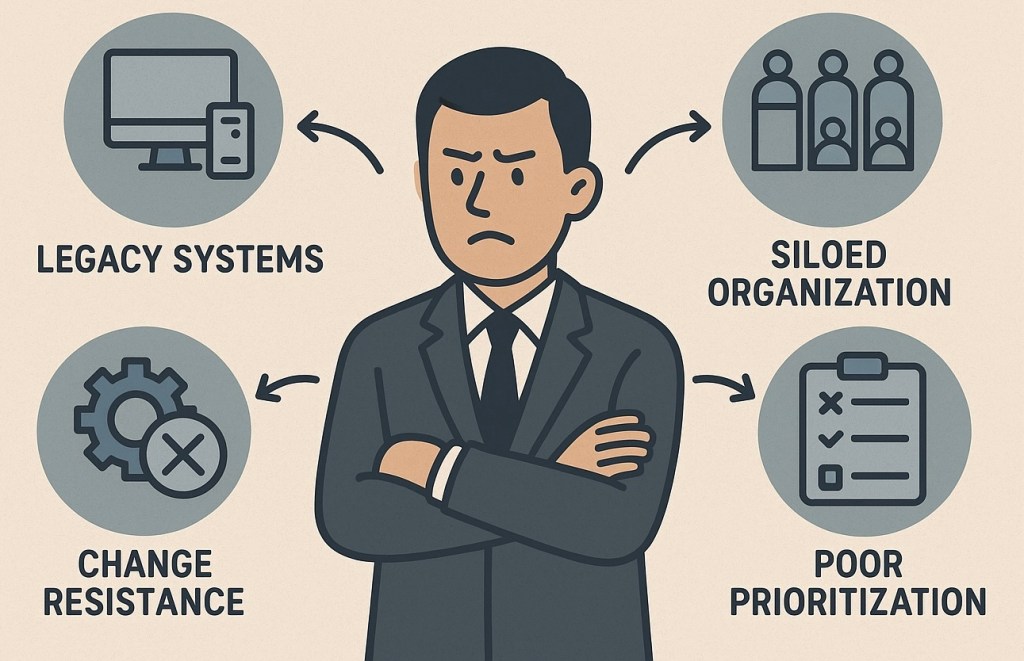
There’s a fundamental tension in organizational change: the desire for agility often conflicts with the comfort of established systems and structures.
Organizations accumulate layers of complexity over time – bureaucratic processes, rigid hierarchies, legacy technologies, established workflows, and cultural norms that once served a purpose but may now hinder rapid adaptation. These elements become deeply embedded, creating organizational inertia that resists change even when leaders recognize the need for greater responsiveness.
True agility requires more than surface-level adjustments or adding new processes on top of old ones. It demands the courage to identify and eliminate what no longer serves the organization’s current needs. This might mean flattening hierarchies that slow decision-making, retiring legacy systems that create bottlenecks, or abandoning comfortable but outdated business models.
The psychological and political challenges are often greater than the technical ones. Leaders and employees may have invested their careers in existing systems, creating resistance to change. There’s also the fear of disrupting what currently works, even if it’s suboptimal, in pursuit of something better but uncertain.
Organizations that achieve genuine agility are those willing to engage in what some call “creative destruction” – deliberately dismantling parts of their current structure to rebuild them in ways that enable faster learning, decision-making, and adaptation. This requires not just strategic vision but also the organizational courage to accept temporary disruption for long-term competitive advantage.
The limitation isn’t usually about knowing what needs to change, but about having the will to actually tear down and rebuild the foundations that have defined how the organization operates.

 Adaptive Ways