
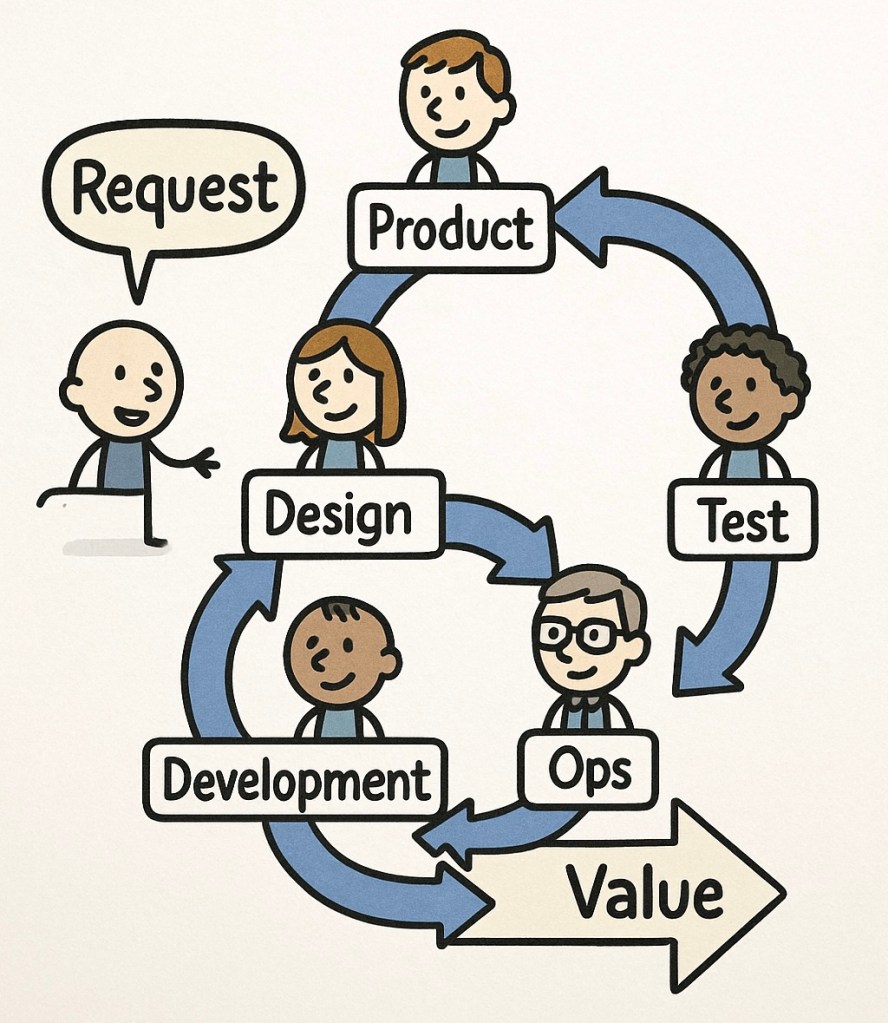
Value streams can indeed be organized in different architectural patterns within broader value systems, each with distinct characteristics and implications.
Embedded Value Streams
When value streams are embedded, they exist as nested components within larger value delivery frameworks. Think of a software company where the core product development value stream contains embedded streams for user research, quality assurance, and deployment. Each embedded stream has its own inputs, processes, and outputs, but they’re tightly coupled to the parent stream’s objectives and cadence.
The embedded approach creates strong alignment and coordination since all streams share common governance, metrics, and strategic direction. However, this can also create bottlenecks when embedded streams have different natural rhythms or resource requirements. For example, a security review stream embedded within feature development might slow overall delivery if not properly balanced.
Networked Value Streams
Networked value streams operate as interconnected but autonomous entities that collaborate across organizational boundaries. Consider how a modern e-commerce platform might coordinate between independent streams for inventory management, payment processing, customer service, and logistics. Each maintains its own optimization goals and operational tempo while contributing to the overall customer value proposition.
This networked model enables greater agility and specialization since each stream can evolve independently while maintaining defined interfaces with others. Teams can optimize their specific value delivery without being constrained by the pace or priorities of other streams. However, this requires sophisticated coordination mechanisms and clear service level agreements between streams.
Hybrid Patterns
Most complex organizations employ hybrid approaches where some streams are tightly embedded while others operate in networked fashion. A bank might have embedded streams for regulatory compliance within each product line, while maintaining networked streams for shared services like fraud detection or customer onboarding that serve multiple product areas.
The choice between embedded and networked architectures depends on factors like organizational maturity, technology constraints, regulatory requirements, and the degree of coupling between different value-creating activities. The key is designing the value system architecture to optimize for both local efficiency within streams and global effectiveness across the entire system.

 Adaptive Ways