
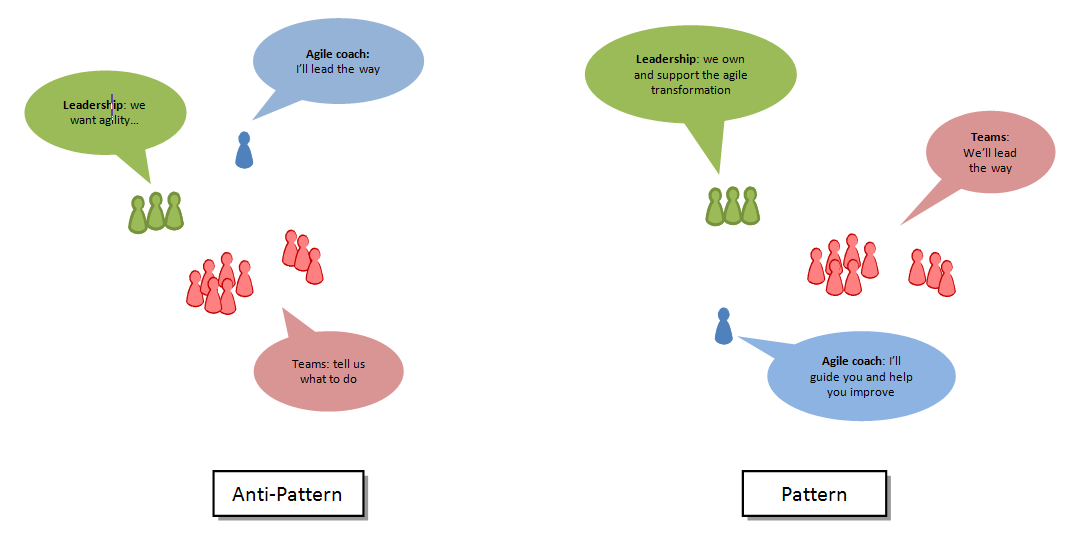
The organization’s agile transition is about evolving the ways of work. It’s not only about the delivery teams, it concerns mid-management and senior leadership as well. How will each actor contribute to the agile transformation?
Anti-pattern:
- Senior leadership decides they want an agile organization (command and control) so they bring in an agile coach to execute and lead the change. Although they support the change, they do not participate actively .
- The teams are informed about the change and expect to be told what to do. They wonder what the coaching plan is.
- The agile coach takes on the change process and leads the way, telling teams how to do things and assuming the responsibility of the desired results.
Pattern:
- Senior leadership understands that agile is the way the organization needs to evolve (vision and strategic objectives), they own and support the change, and they participate by setting up an environment where agile practices can evolve (organizational values).
- The teams are consulted about the change and decide on agile/lean practices to adopt according to their ways of working and behavioral patterns. They will request help from the agile coach as soon as they are ready to start the transformation. They lead the way!
- The agile coach will guide the transition process by helping the teams and leadership to improve their practices, and encouraging finding solutions to solve problems encountered. There’s a transfer of full responsibility and accountability to the teams and leadership.

 Adaptive Ways