
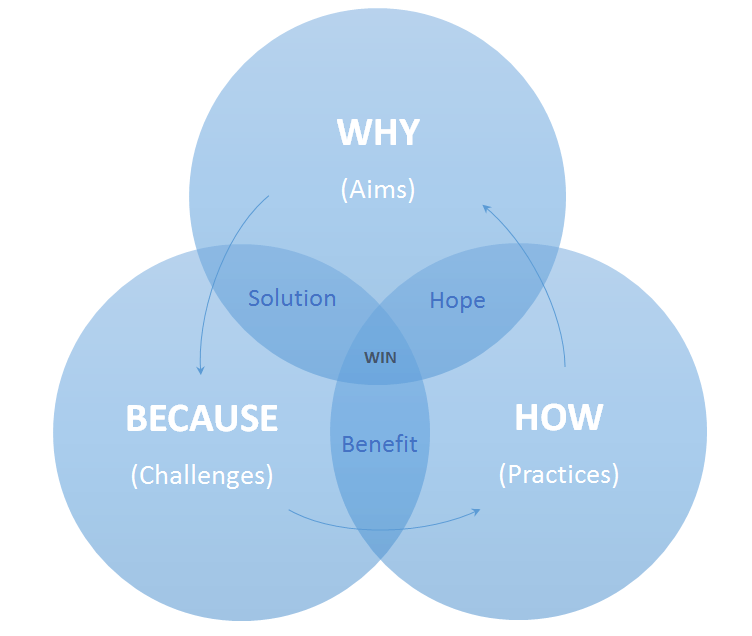
The evolution towards agility is achieved through an iterative and adaptive approach: the why it should be done, is backed up by the because it needs to be done, in order to define the how to do it.
The organisation will define what it expects from agility, what benefits will agility bring to the organisation, what is agility value proposition. For exemple: improve time to market, quality and ROI; easy management of project scope and quick risk mitigation; promote transparency, ownership and decision making; etc.
Thee journey towards agility may be hampered by various types of challenges, organizational, architectural, technical, cultural, that need to be solved.
The choice on how to go about removing these impediments is based on both an understanding of lean/agile values and principles, and mapping it to the underlying culture of the organization. This provides a clear view of the existing gaps and how to apply lean/agile to the unique organization context (business, market, people).
Therefore, the outcome of using suitable practices is to provide a means for aims to be met by addressing the identified challenges. The win factor will be defined by the amount of problems solved through coherent practices, meeting the expectations
Rinse and repeat as necessary until all expectations are met, and with time and practice agile maturity will evolve and a cultural shift will emerge.

 Adaptive Ways