
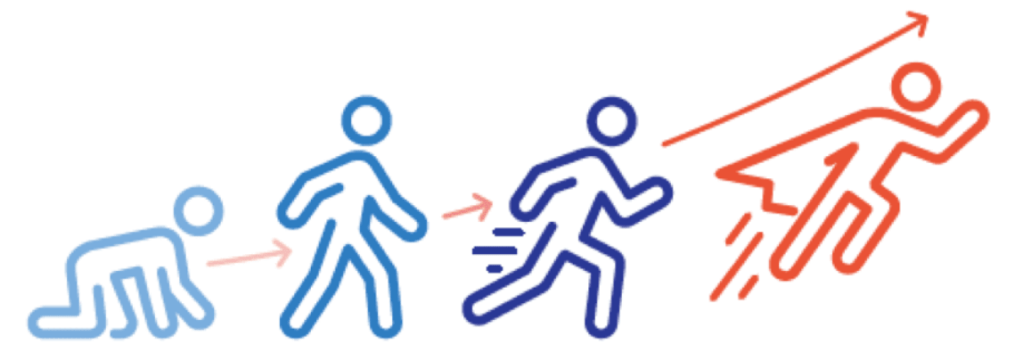
Simple agility is based on the understanding of some basic agility fundamentals and easing these into the team/organization ways of working. Making sense out of these fundamentals is the key to durable agility.
A word about agility
In its most basic form work agility can be summarized as
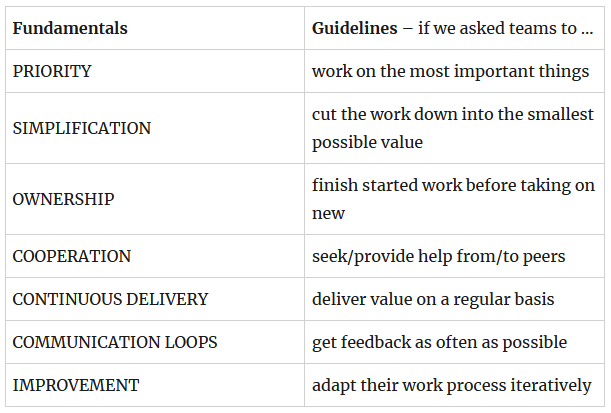
• Only work on the most important things at any given point in time (prioritization)
• Break those things into smallest-size tasks for individuals to work on autonomously (small batches)
• Catch up on progress as often as possible (feedback loops)
• Deliver the set of things regularly and then plan the next set of things (continuous value delivery)
Purpose
• Reduce waste by cutting the work to the minimum deliverable value
• Reduce risk by delivering small quantities often
• Increase efficiency by improving iteratively
Facilitation
• Establish the team (capability, capacity, responsibilities, …)
• Create the work backlog (write user/job stories, prioritize, refine, estimate)
• Make agreements on how to deliver value (approach, dependencies, work acceptance, DoD, work flow visualization, feedback loops, continuous improvement)
Responsibilities leading to value creation
• creation and management of the PBL (PO)
• design, development, testing, and implementation of PBL work items (Team)
• looking after the team through guidance and facilitation (Coach)
Final thought
Simple agility is all about owning the work and making it transparent; committing and collaborating to finish work; and delivering value in a continuous manner. It is all about pursuing and achieving TRUST on yourself, the team, the governance.

 Adaptive Ways