
Whatever the intent of an organization when it decides to transition towards agility, its ecosystem needs to be adapted for purpose. Just adopting agile practices without attending to the context and how these interact and impact the ways of working will fail to provide the expected results for the investment on agile.
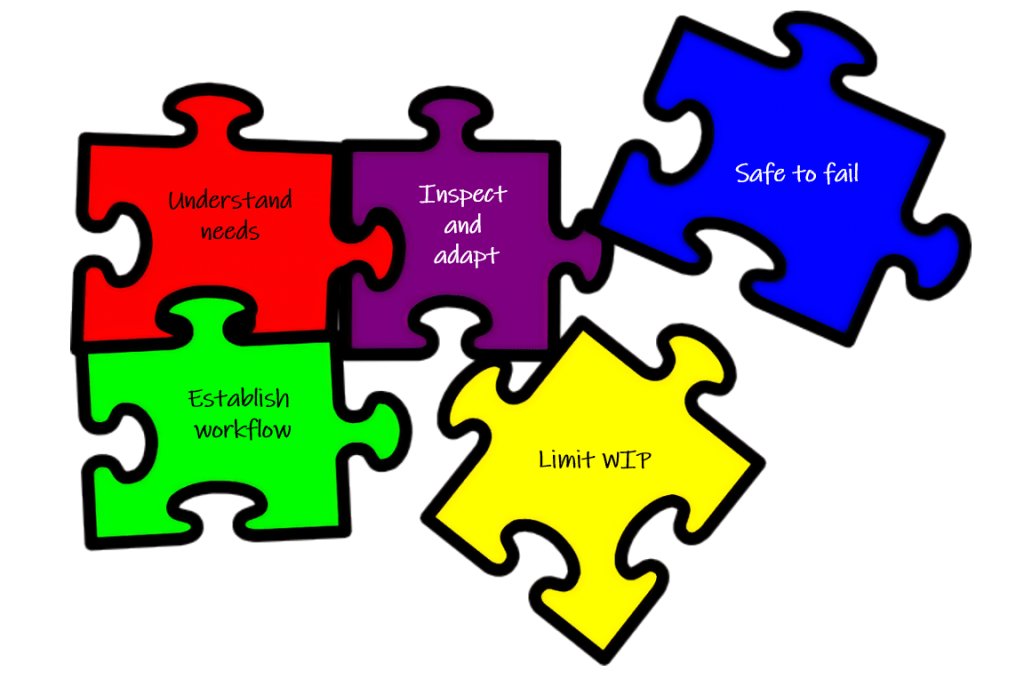
Agility can only provide value to the organization as long as a suitable ecosystem is put in place for agile practices to evolve. I like to think of some basic capabilities that set the base for an agile ecosystem, aligned with agile values, constitute a minimum suitable ecosystem for agility, allowing for:
- the understanding of needs
- establishing workflows
- inspect and adapt work in progress
- safety to fail
These four capabilities need to be integrated to the existing ecosystem to facilitate the existence of agile teams at all levels of the organization. This can be achieved through the promotion of
- customer focus and value outcomes – the understanding of needs becomes easier
- transparency and visibility of the value stream – workflows can be better identified and set up
- self-organization and workflow management – teams can inspect and adapt their work processing
- continuous learning and improving – safety will prevail
They will also encourage assimilation by established elements like organization, governance, operations and infrastructure, architecture, etc., which at times can be beneficial or hinder agility. Identifying the attributes that make for one or the other, can help adapt the ecosystem.
A minimum suitable ecosystem provides the foundation for simple fit for practice agility.

 Adaptive Ways